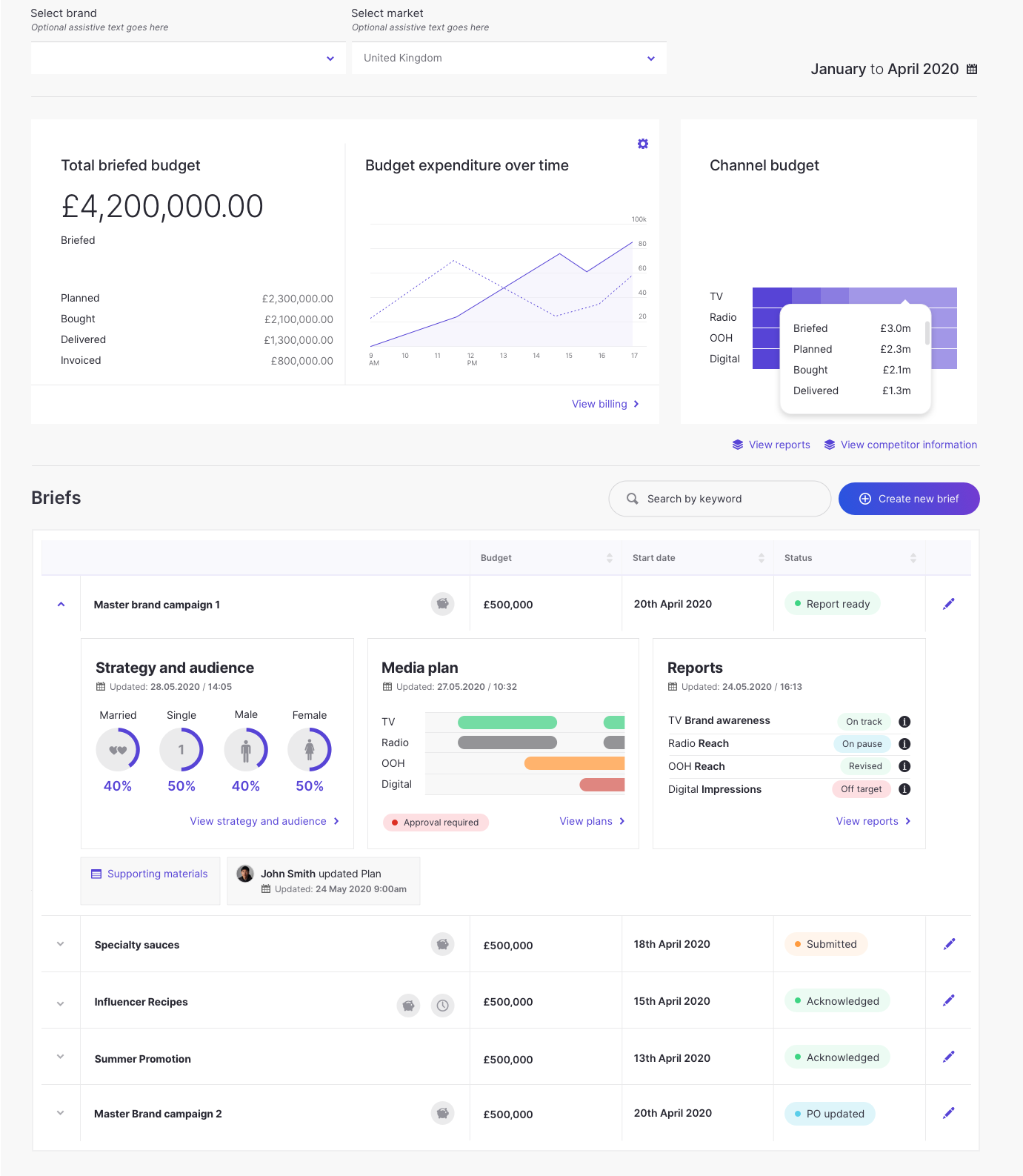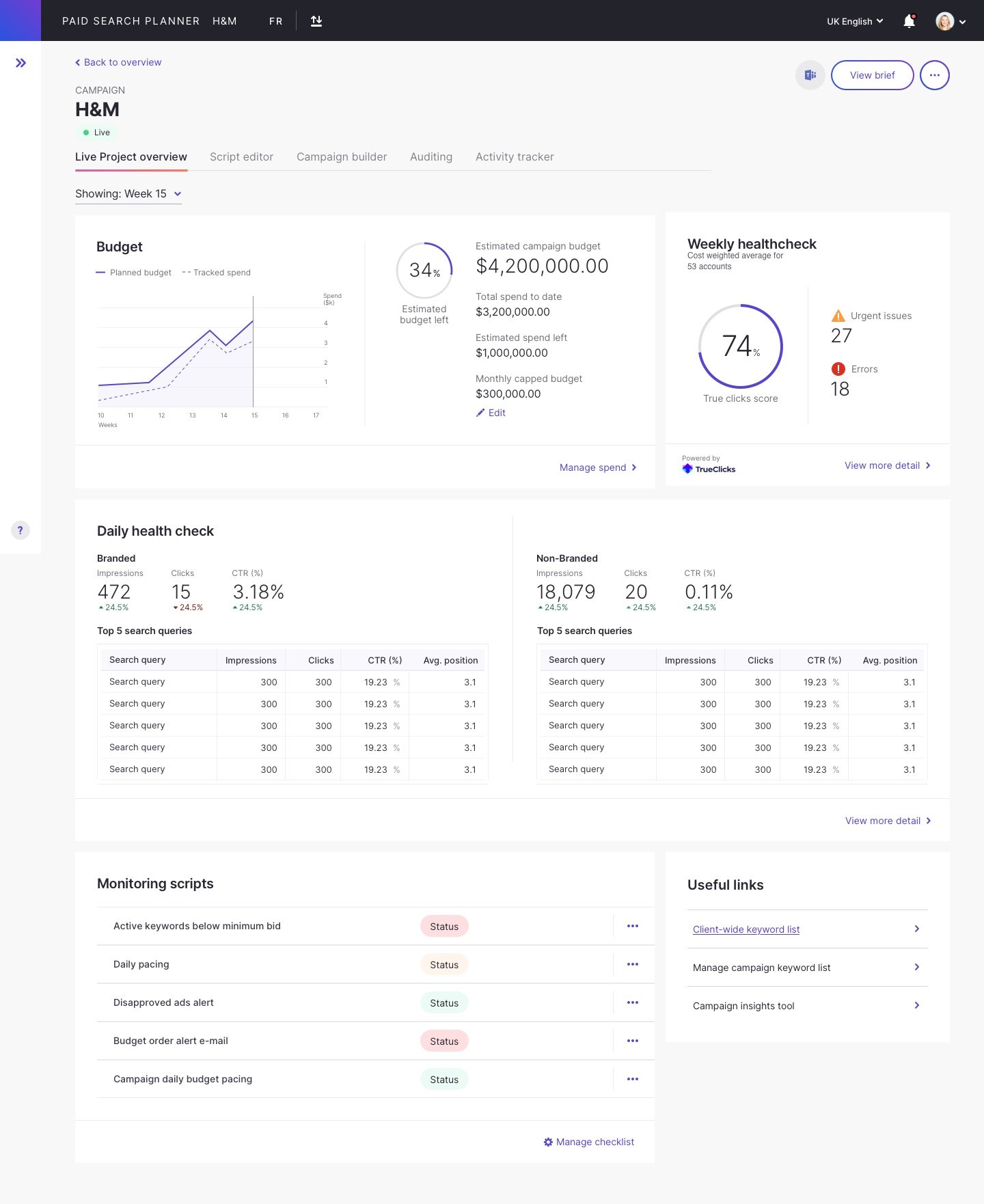
Dentsu - B2B SaaS Platform
Challenge
Help one of the largest advertising agencies in the world increase productivity and revenue through efficiency and better data governance
Dentsu has a footprint spanning 143 markets across the globe. Due to its size and growth through acquisitions, it suffers from problems common to large organisations: inconsistent tools and processes used by teams that lead to inefficiency and additional costs.
I led a team of product designers and worked with Dentsu’s internal teams to design a suite of digital products that could be consistently used across all of the agency’s markets.
Research led design
The programme needed to adopt a test and learn culture. Instead of making design decisions for each new product based on subjective opinion, we must first begin by understanding the users of the product and ensuring we are solving the right problems.
The team and I began by creating a baseline of understanding composed of insights from internal stakeholders. The stakeholders provided our research team with access to end users across the agency, while also informing our design teams about initial problems to focus on. As my team of UX and UI designers set about initially looking into key problem areas, we conducted discovery research that further informed the design process. We conducted research with employees worldwide from the UK to Germany, Australia and the United States. Working during the pandemic, all research sessions were carried out remotely using video conference tools. This environment actually provided a unique opportunity to allow design teams to remotely observe research sessions and then immediately adjust or pivot their solutions. We were then able to follow up with respondents by having them evaluate clickable prototypes of new experiences and to ensure we designed the right solution for the right problem.
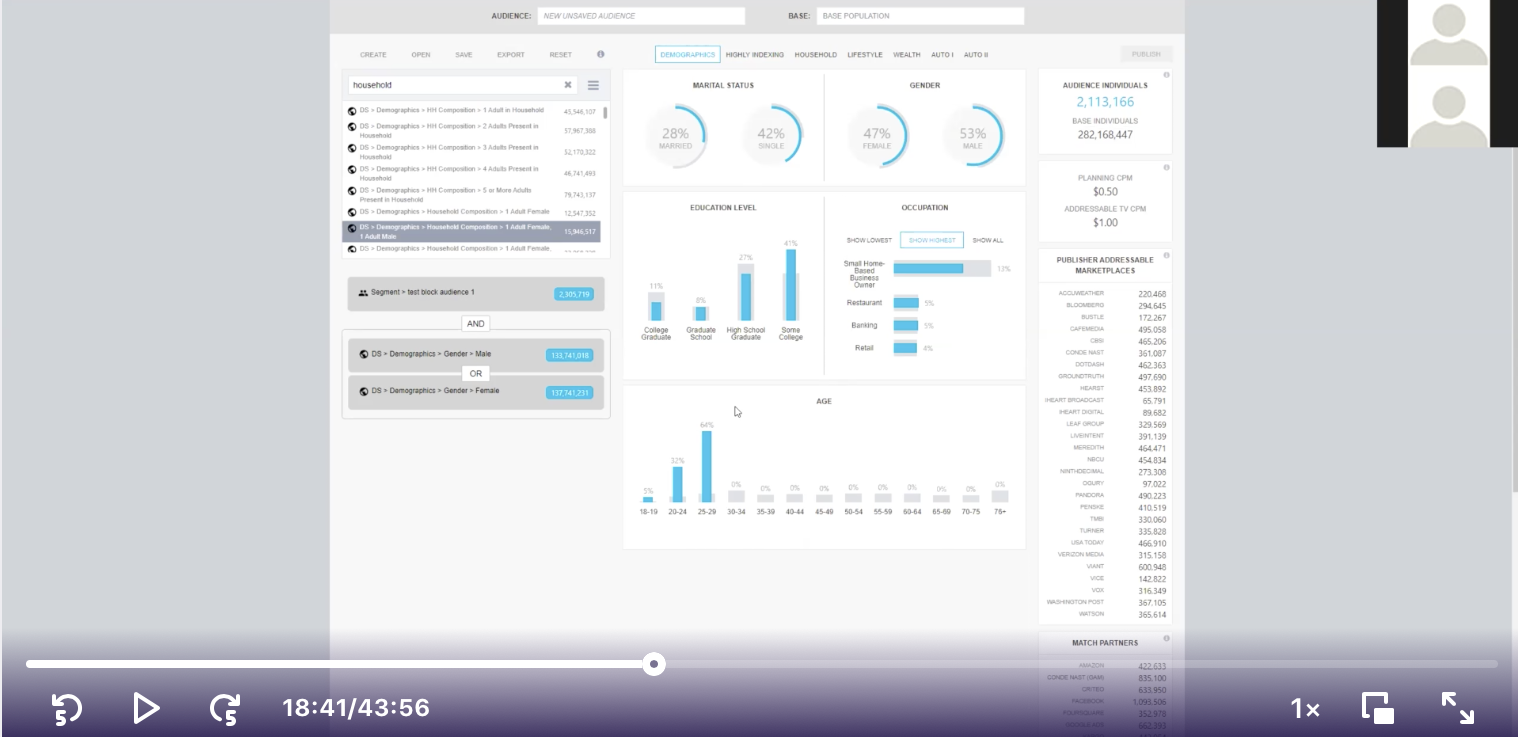
Unifying the team through collaboration and design systems
Most team members were each tasked with designing a separate product for the agency, so trying to solve problems unique to that product, while also maintaining consistency across the entire suite. With all team members working remotely, we had to find ways to create unity from a distance. I created a series of virtual “workspaces” for each new product. Each workspace was a single area where all assets (business challenges, insights, user journeys, designs) were shared. This meant anyone working on the specific product or even on other related products could view the workspace of a product and immediately understand what was being worked on.
With workspaces created, I led the team to establish a regular cadence of product-focused sessions. Video conferences bringing together research, design, product and development teams to agree on overall product direction, share design work and ensure feasibility for development. To augment these, we also established a weekly design gathering, allowing research, UX and UI teams to come together to share their work, comment, critique and push the work forward. Thanks to a robust design system, our UX and UI teams were able to work at pace and the weekly design sessions also served as a forum to evolve and improve the design system over time.
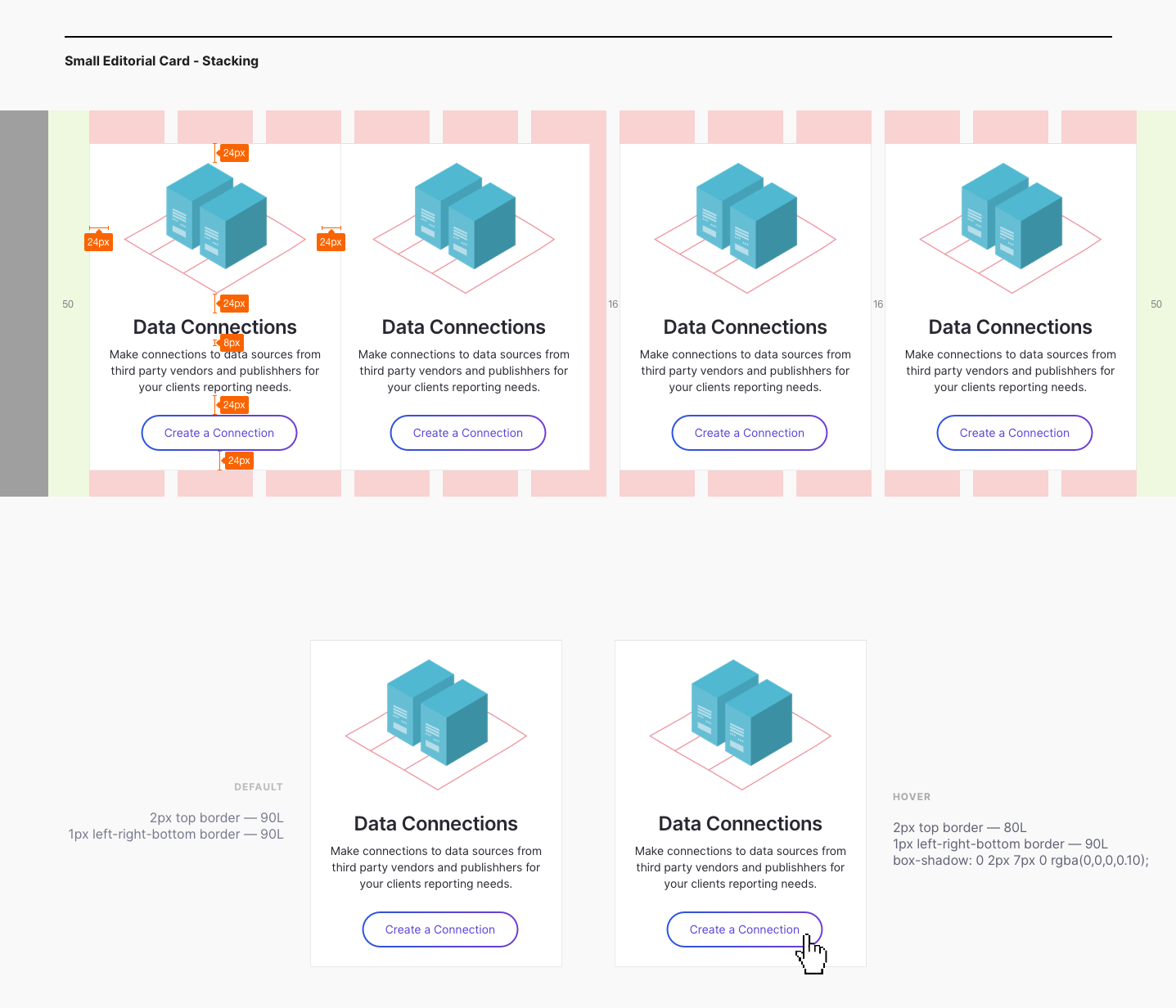
Leaving a lasting impact with a research repository
Creating a test and learn culture: The practice of research-led design is now widely used throughout the agency’s design team. Through our work, we have so far conducted well over 200 interviews with various employees across the business and we’re still going.
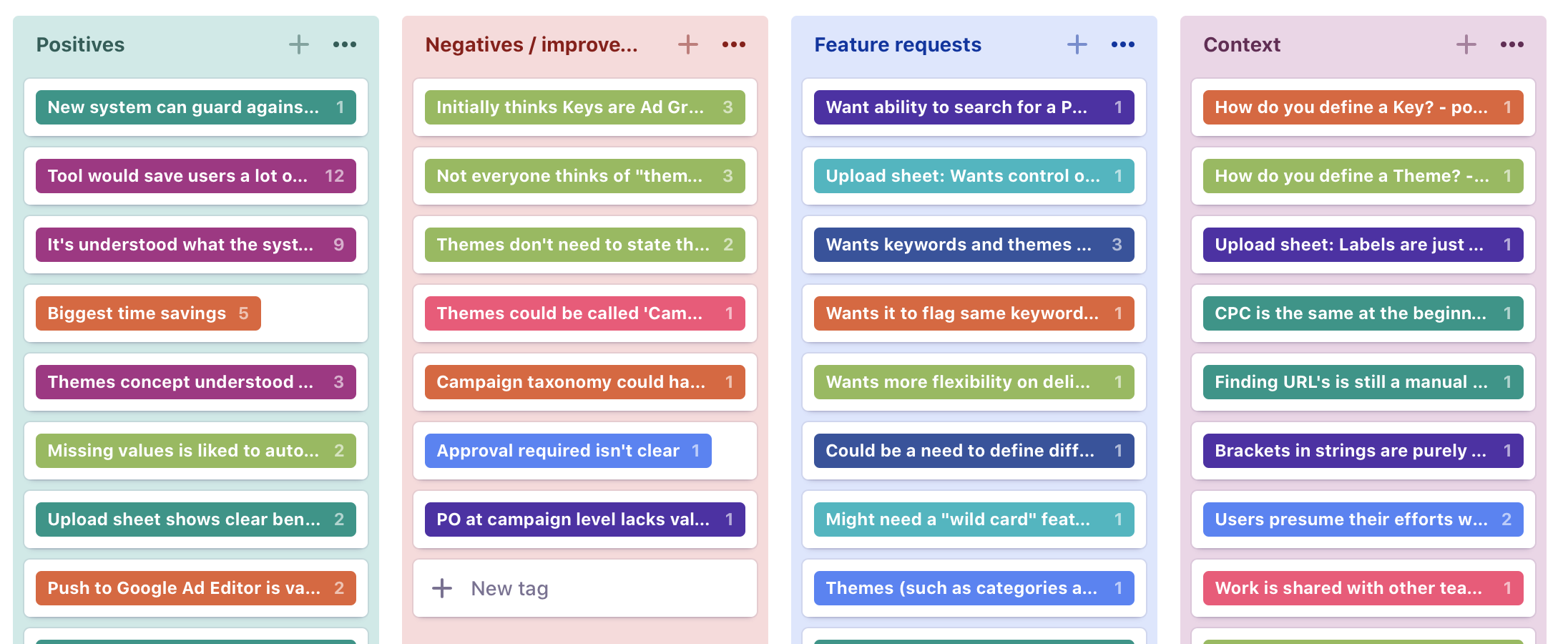
Research repository: The repository consists of transcribed video of each interview with associated research notes and insights. There are separate repositories for each product designed, making them easy to browse at a glance. The transcriptions and notes of every interview are searchable, meaning all present and future members of the design team will have access to a rich store of insight for years to come.
Lessons learned
Everything we do is a learning experience. There are always new lessons to take forward that we can use to change and improve for our next engagement. Here are a few things I learned from the engagement that I will build upon:
No big bangs: The amount of time and effort it takes to design, build and launch huge capabilities or features results in products that lag user expectations and teams who are too exhausted to provide value. Focus on small, incremental launches that deliver real benefit.
Don’t build the “everything machine”: In highly complex and diverse organisations, products can’t be all things to all people, and certainly not from their initial release. Find your core set of users in a single market and design the product that works for them. You’ll solve real problems, provide immediate benefits and gain insights that can be used in rolling out the product to other audiences and markets.
Solve problems, don’t deliver features: Think about any product you use. Most often, the reason that you use it is because it solves a real problem or helps you perform a job. The products you design are no different. They need to solve real problems for people. Too often, teams focus on delivering a backlog full of features which may ultimately deliver little or no value. It’s also hard to prioritise a list of features if you have no idea of the severity of the problems that users have. Focus on solving user problems first and the features will follow.
Solve real problems any way you can: Focusing on solving problems is key and research is the tool to uncovering those problems. When it comes to solving them though, don’t always assume that it’s a piece of technology or some kind of application that is needed. Often times, the hardest problems can be solved through more effective communication and promoting a shared understanding amongst teams. Sometimes it’s as simple as cutting out a meeting or sending emails to the right person at the right time that can lead to huge improvements.